

Hey there! As a forged ring supplier, I'm super stoked to take you on a deep - dive into how these amazing forged rings are made. There's a lot more to it than you might think, and I'm gonna break it all down for you.
1. Starting with the Right Material
First things first, picking the correct material is crucial. We usually work with different types of steel, but depending on what the ring is gonna be used for, we might also go for alloys. For example, if it's a Wind Turbine Ring Gear, we need a material that can handle high stress and has good fatigue resistance. Steel alloys are often the go - to here because they offer a great balance of strength and durability.
Once we've decided on the material, we source it from reliable suppliers. We make sure the material meets all the required standards and specifications. Quality control starts right at this stage because if the material is no good, the final forged ring won't be either.
2. Heating the Material
After getting the right material, it's time to heat it up. We use industrial furnaces to do this. The heating process is super important as it makes the metal more malleable. We heat the material to a specific temperature range. This range depends on the type of metal we're working with. For most steels, we heat them up to around 1100 - 1200 degrees Celsius.
Heating the metal evenly is key. If it's not heated uniformly, it can lead to problems during the forging process. For example, some parts might be too hard while others are too soft, which could cause the ring to have weak spots or deform unevenly.
3. Initial Forging
Once the metal is at the right temperature, it's time for the initial forging. We use big presses or hammers to shape the heated metal. In our case, we use hydraulic presses because they offer a lot of force and precision.
The first step in the initial forging is to create a rough shape. We turn the heated metal into a billet, which is a cylindrical piece of metal. This billet will then be further shaped into the ring. It's like sculpting clay, but with super - hot metal!
During this process, we have to be really careful with the amount of force we apply. Too much force can crack the metal, and too little won't shape it properly. Our experienced operators use their skills and knowledge to get it just right.
4. Piercing the Billet
After getting the billet, the next step is to pierce it. We use a special tool called a punch to make a hole in the center of the billet. This is the beginning of turning the billet into a ring.
The piercing process needs to be precise. If the hole isn't centered or is the wrong size, it can affect the final dimensions and balance of the forged ring. We measure and double - check everything to ensure accuracy.
5. Ring Expansion
Once the billet is pierced, we start expanding it into a ring. We use a ring rolling machine for this. The ring rolling machine has rollers that gradually increase the diameter of the ring while reducing its thickness.
This process is amazing to watch. It gives the ring its final shape and helps improve its grain structure. A good grain structure means the ring will be stronger and more resistant to wear and tear. We can control the speed and pressure of the ring rolling machine to get the exact dimensions and properties we need for the Forged Rings.
6. Heat Treatment
After the ring is formed, we subject it to heat treatment. Heat treatment is like giving the ring a special boost to make it even better. There are different types of heat treatments, such as annealing, quenching, and tempering.
Annealing is used to relieve stress in the ring and make it more ductile. Quenching involves cooling the ring rapidly to harden it. And tempering is done after quenching to reduce brittleness and improve toughness. We choose the right heat treatment process based on the requirements of the ring. For example, Industrial Ring Gear might need a different heat treatment compared to a ring used in an oil and gas application.
7. Machining and Finishing
Once the heat treatment is done, the ring goes through machining. We use lathes, milling machines, and other tools to give the ring its final dimensions and surface finish. Machining helps remove any excess material and gives the ring a smooth and precise surface.
After machining, the ring might also go through finishing processes like grinding or polishing. This not only makes the ring look better but can also improve its corrosion resistance and performance.
8. Quality Control
Throughout the entire process, quality control is a top priority. We use a variety of testing methods to ensure the ring meets the required standards. Non - destructive testing methods like ultrasonic testing and magnetic particle testing are used to check for internal flaws in the ring.
We also measure the dimensions, hardness, and other properties of the ring. Every single ring that comes out of our facility has to pass these strict quality control checks. Only then do we consider it ready for delivery.
Applications of Forged Rings
Forged rings are used in a wide range of industries. In the wind energy industry, Wind Turbine Ring Gear are essential components for the smooth operation of wind turbines. They have to withstand high - speed rotations and heavy loads.
In the industrial sector, Industrial Forgings are used in machinery like presses, crushers, and generators. These forged rings provide the strength and reliability needed for these heavy - duty applications.
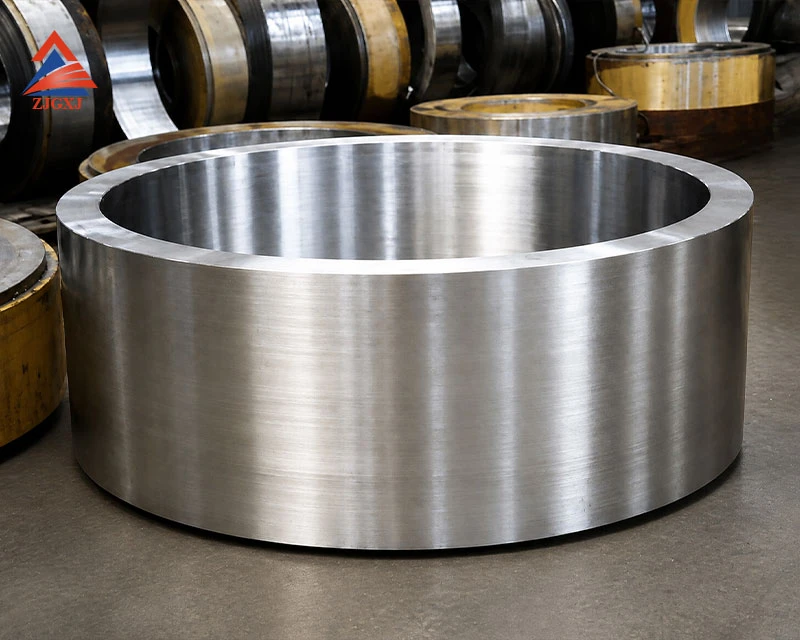

The oil and gas industry also relies heavily on forged rings. Oil and Gas Forgings are used in pipelines, drilling equipment, and refineries. They have to be able to handle harsh environments, high pressures, and corrosive substances.
Why Choose Our Forged Rings?
We take pride in our forgings. Our team of experts has years of experience in the forging industry, and we use state - of - the - art equipment to ensure the highest quality of our products. We're committed to meeting the specific needs of our customers, whether it's a small - scale order or a large - scale project.
If you're in the market for high - quality forged rings, we'd love to hear from you. Whether you need a Wind Turbine Ring Gear, Industrial Forgings, Industrial Ring Gear, Oil and Gas Forgings, or any other type of Forged Rings, we can provide you with a solution that fits your requirements.
So, don't hesitate to reach out for a quote or to discuss your procurement needs. We're here to make the process as smooth and hassle - free as possible.