

Hey there! As a supplier of Pressure Vessel Flange, I often get asked about the differences between forged and cast pressure vessel flanges. So, I thought I'd break it down in this blog post.
Let's start with the basics. Pressure vessel flanges are crucial components in many industrial applications. They're used to connect pipes, valves, pumps, and other equipment to form a complete piping system. And they need to be strong, reliable, and able to withstand high pressures and temperatures.
Forged Pressure Vessel Flanges
Forged flanges are made by applying compressive forces to a metal billet. This process involves heating the metal to a certain temperature and then using a hammer or a press to shape it into the desired form. The result is a flange with a very dense and uniform structure.

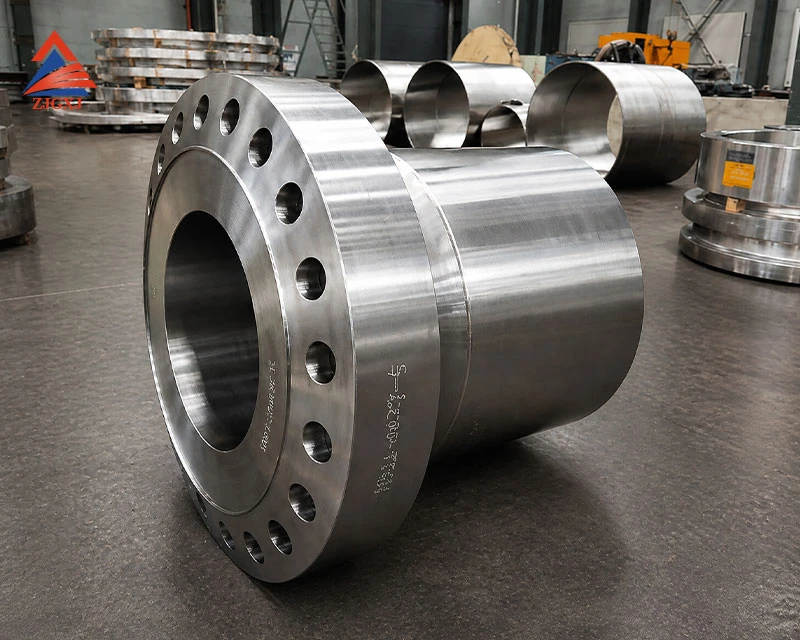
One of the biggest advantages of forged flanges is their strength. The forging process aligns the grain structure of the metal, which makes the flange more resistant to cracking and fatigue. This is especially important in applications where the flange is exposed to high stress, like in the oil and gas industry or in power plants.
Another plus is the quality control. Since each forged flange is made from a single piece of metal, it's easier to ensure its composition and integrity. Metal suppliers can test the raw material before forging and then perform additional inspections on the finished product. This leads to fewer defects and a higher level of reliability.
Forged flanges also have better ductility. That means they can deform under stress without breaking, which is a very useful property in pressure vessels that might experience expansion or contraction due to temperature changes.
However, forged flanges aren't without their drawbacks. The forging process is more labor - intensive and requires specialized equipment. This makes the production of forged flanges more expensive compared to cast flanges. Also, the lead time for production can be longer, especially if the flanges have complex shapes.
Cast Pressure Vessel Flanges
Cast flanges, on the other hand, are made by pouring molten metal into a mold. Once the metal cools and solidifies, it takes the shape of the mold. This process is great for producing parts with complex geometries.
Cost - wise, cast flanges have an edge. The casting process is generally faster and less labor - intensive, which reduces the overall production cost. This makes them an attractive option for applications where cost is a major concern.
Another advantage of cast flanges is the ability to produce large - scale parts. The casting process can handle very large volumes of metal, making it suitable for big - sized pressure vessel applications.
But there are some downsides. Cast flanges tend to have a more porous structure compared to forged ones. These pores can weaken the flange and make it more susceptible to corrosion and cracking. Quality control can also be a bit trickier with cast flanges because it's harder to detect internal defects in the casting.
Comparison in Different Industries
Engineering
In Engineering Flanges, both forged and cast flanges have their places. For applications where precision and high strength are required, like in mechanical engineering, forged flanges are usually the top choice. Their reliable structure ensures that they can handle the stress of complex engineering systems. However, for less critical components or in projects with tight budgets, cast flanges can be a good alternative.
Petrochemical
The Petrochemical Forged Flanges and Petrochemical Flange industry typically favors forged flanges. The harsh operating conditions, including high pressures, high temperatures, and corrosive environments, demand the superior strength and durability that forged flanges can offer. A small crack or failure in a petrochemical flange can lead to serious safety hazards and costly downtime. So, the extra cost of forged flanges is often justified.
Industrial
In the Industrial Flange sector, the choice between forged and cast flanges depends on the specific requirements of the application. For general industrial use where the stress levels are relatively low and cost is a factor, cast flanges might be sufficient. But for heavy - duty industrial applications such as in steel mills or chemical plants, forged flanges are more commonly used due to their better performance under stress.
Aesthetics and Finish
In terms of appearance, forged flanges usually have a smoother and more uniform finish. The forging process can create a clean and precise surface, which is not only visually appealing but can also be beneficial in applications where a good seal is required. Cast flanges, however, may have a coarser finish and may require additional machining to achieve a smooth surface.
When it comes to customizability, both types have their merits. Forged flanges can be customized to some extent, but the complexity of the shape is limited by the forging process. Cast flanges, on the other hand, can be made into almost any shape, making them a great choice for highly customized applications.
Making the Right Choice
As a supplier, I always recommend that customers consider their specific needs when choosing between forged and cast pressure vessel flanges. If strength, reliability, and long - term performance are your top priorities, and cost is not a major constraint, then forged flanges are probably the way to go. But if you're on a tight budget and your application doesn't require the highest level of strength and precision, cast flanges can serve the purpose.
No matter what your decision is, I'm here to help. Whether you need more information about the products or you're ready to place an order, don't hesitate to contact me for a detailed discussion. We can work together to find the best - suited pressure vessel flanges for your project.