

Hey there! As a supplier of industrial forgings, I'm super excited to take you through the fascinating process of how these bad boys are made. It's not just about hammering metal; there's a whole lot more to it.

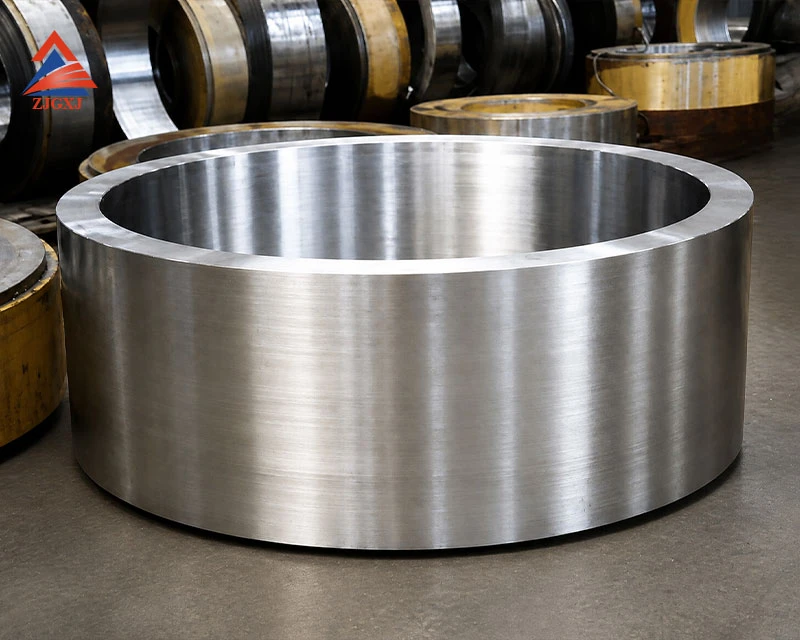
First off, let's talk about the raw materials. We usually start with high - quality steel or other alloys. The choice of material depends on what the final forging is gonna be used for. For example, if it's for Wind Turbine Ring Gear, we need a material that can withstand high stress and fatigue over a long period. Steel is a popular choice because it's strong, durable, and can be heat - treated to enhance its properties.
Once we've got the right raw material, the next step is heating. We heat the metal in a furnace to a specific temperature. This is crucial because it makes the metal soft and malleable. Think of it like when you heat up a piece of wax; it becomes easier to shape. The heating process has to be carefully controlled. If the metal is heated too much, it can lose its strength, and if it's not heated enough, it'll be too hard to forge.
After the metal is heated to the right temperature, it's time for the actual forging. There are different types of forging methods, and two of the most common ones are open - die forging and closed - die forging.
In open - die forging, the metal is placed between two flat or shaped dies, and a hammer or a press applies force to shape it. This method is great for making simple shapes or when we need to work on large pieces of metal. It allows for a lot of flexibility in the shaping process. For instance, if we're making Industrial Ring Gear, we might use open - die forging to get the basic shape of the gear.
On the other hand, closed - die forging is more precise. The metal is placed in a die that has the exact shape of the final product. When the press applies force, the metal fills the die cavity, taking on the desired shape. This method is used for more complex shapes and when we need high precision. For example, parts for Oil and Gas Forgings often require the accuracy that closed - die forging can provide.
During the forging process, we also need to pay attention to the direction of the grain in the metal. The grain is like the internal structure of the metal, and by controlling its direction, we can improve the strength and performance of the forging. For example, if the forging is going to be used in a high - stress application, we want the grain to be aligned in the direction of the stress.
After the forging is done, it goes through a series of finishing operations. One of the first steps is heat treatment. Heat treatment can change the properties of the metal, such as its hardness, toughness, and ductility. We might use processes like quenching, tempering, or annealing. Quenching involves rapidly cooling the metal to increase its hardness, while tempering is used to reduce the brittleness that can be caused by quenching. Annealing, on the other hand, softens the metal and relieves internal stresses.
Next, we do some machining. Machining is all about cutting, drilling, and shaping the forging to its final dimensions. We use different tools like lathes, mills, and drills to remove any excess material and create the precise features that the product requires. This is where we really fine - tune the forging to meet the customer's specifications.
Surface treatment is also an important part of the finishing process. We might apply a coating to protect the forging from corrosion or to improve its appearance. For example, we could use a zinc coating or a paint finish.
Quality control is a big deal throughout the whole process. We use various inspection methods to make sure that the forgings meet the required standards. We might use non - destructive testing methods like ultrasonic testing, magnetic particle testing, or radiographic testing to detect any internal flaws in the metal. We also measure the dimensions of the forging to ensure that it's within the specified tolerances.
As an Industrial Forgings supplier, we take pride in our ability to produce high - quality forgings. Whether it's a simple Forged Rings or a complex part for a specialized industry, we've got the skills and the technology to get the job done right.
If you're in the market for industrial forgings, I'd love to have a chat with you. We can discuss your specific needs, the materials you require, and the best forging method for your project. Don't hesitate to reach out and start a conversation about your procurement. We're here to provide you with top - notch products and excellent service.