

Hey everyone,
If you've ever ordered forged die inserts for your stamping, forging, or molding operations, you've probably noticed that not all inserts perform the same. Some last twice as long, hold tighter tolerances, and handle higher loads without cracking or wearing out early. Today I want to pull back the curtain on why that happens-specifically, how the forging process directly shapes every key property of the inserts we supply here. As someone who's been in the forged die insert game for over a decade, I've seen firsthand that skipping or cutting corners in forging leads to parts that cost you way more in downtime than any short-term savings. Let's break this down, no fancy jargon that doesn't mean anything.
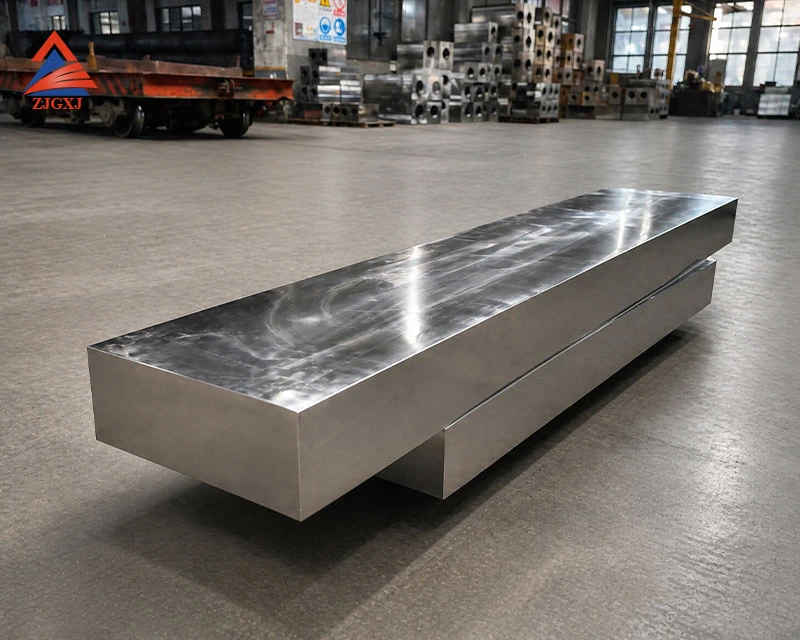

First, let's start with the basics. Forging isn't just heating a block of metal and bashing it into shape (though it looks that way at first glance). It's a controlled process where metal is shaped using compressive force, usually with a hydraulic press or hammer. The starting material matters too-most quality inserts use die steel, which is hard and wear-resistant, or sometimes mold steel for applications that need a bit more toughness. If you're not sure where to start, checking out Die Steel Forging or Mold Steel Plate Forging can help you wrap your head around the right base material for your needs. Now, how does turning that steel into a block (like a Forged Die Block first, before machining it into an insert) change its properties?
Let's talk about grain structure first-this is the foundation of everything. When steel is cast from molten metal, it forms big, messy, tree-like grains that are weak and full of tiny pockets (voids) where air or impurities got trapped. Forging breaks those big grains down into tiny, uniform, equiaxed grains. Why does that matter? Smaller grains mean the metal is stronger, more resistant to cracking, and better at holding a sharp edge. If the forging isn't done right (like not heating the metal to the correct temperature before pressing, or not applying enough force), you end up with those old big grains hanging around, which makes the insert prone to breaking when you're stamping thick steel or forging hot parts. I've had customers tell me their inserts cracked on their 5th run, and after testing we found the grain size was 3x bigger than it should be-all because the previous supplier skipped a critical forging step. That's the kind of thing we never do here; every Forged Die Insert leaves our shop with a grain structure optimized for maximum strength.
Next up: density. Those voids from casting I mentioned? Forging crushes them closed. A cast steel part might have a tiny internal void that, when you apply repeated pressure (like in a die insert that's hit thousands of times a day), starts as a small crack and grows until the insert fails. Forged inserts have zero internal voids if done correctly, so they handle cyclic loads way better. We once did a side-by-side test with a customer: one cast insert lasted 12,000 cycles, our forged one lasted 78,000 cycles. The only difference was the forging step-no changes to the steel grade or machining. That's the kind of performance that adds up to way less downtime and fewer replacement parts.
Toughness is another big one. Toughness is the ability of a part to bend or flex a little without breaking, which is super important for inserts that deal with impact loads (like when a blank hits a stamping die hard, or when you're forging thick parts). Forging improves toughness because it aligns the grain structure in a way that resists crack propagation. If you forge in the right direction (forging flow lines), those lines follow the shape of the insert, so a crack has to work way harder to cross them. If the forging is done wrong-like not orienting the forging correctly, or not applying enough pressure to get proper flow-you get weak spots where the insert will break suddenly, usually without warning. We always map the load direction for each custom insert we make, and adjust the forging process to align the grain flow perfectly with those loads. That's why our inserts rarely fail suddenly, even when pushed to their limits.
Wear resistance-probably the most requested property from our customers, right? Insert wear is the #1 reason people replace dies, and guess what? Forging is a huge factor here. When you heat steel to forging temperature (usually around 1100–1250°C for die steels) and deform it, you create a more uniform distribution of carbides in the metal. Carbides are the super hard particles that make steel resist wear, and forging makes them spread evenly instead of clumping together. Clumped carbides are bad because they fall out easily, leaving pits that make the insert wear faster. Uniform carbides mean the insert stays smooth longer, so your stamped or forged parts have better surface finish too. I've had a customer in the automotive stamping business who switched to our inserts because their previous ones had to be polished every 5,000 cycles to keep parts from having scratches. Our inserts only needed polishing every 20,000 cycles-all because of how we forge the carbides in.
Wait, let's not skip over the heat treatment step that comes right after forging, because they work hand in hand. Forging creates a workpiece that's ready for heat treatment, but the forging temperature and cooling rate after forging affect how the heat treatment turns out. If you cool the forged part too fast, you get stresses that can cause warping later when you machine it. Cool too slow, and you get soft spots that will wear unevenly. We control the cooling rate in our forging presses so that the part has minimal residual stress before heat treatment, which means less warping during machining and a more consistent hardness across the entire insert. Hardness is another thing-if forging is done wrong, you can have hard and soft spots in the same insert, so some areas wear faster than others. Our process ensures Rockwell hardness is within ±1 HRC across the whole insert, which is a big deal for consistent part quality and longer insert life.
Let's talk about real-world examples to make this concrete. Last year we worked with a small forging shop that was using inserts from a supplier overseas. Their inserts were failing every 3 weeks, costing them $15k a week in downtime and replacement parts. They switched to our forged die inserts, and those same inserts are lasting 12 weeks now. When we tested the old inserts, we found they had a grain size that was almost twice what it should be, plus tiny voids from incomplete forging. The overseas supplier was cutting corners on forging time and pressure to save money, and it was costing the customer way more. That's why we always prioritize forging quality over speed here-our customers don't just buy parts, they buy reliability that keeps their production lines running.
Another point: tolerances. Forging doesn't just affect material properties-it also helps with dimensional stability. When you start with a forged block (like the Forged Die Block) instead of a cast or machined plate, you get a more uniform structure that doesn't distort as much during heat treatment. That means when you machine the insert to its final shape, you end up with tighter tolerances, which is crucial for parts that need to fit perfectly with mating dies. If tolerances are off, you get parts that don't meet specs, or wear on the insert is uneven, leading to early failure. We work with customers to specify the exact tolerances they need, and our forging process helps us hit those tolerances consistently without extra machining steps that add cost.
Wait, what about when people ask about non-forged inserts? I'll be honest-we don't sell non-forged inserts, and here's why. Cast inserts might be cheaper upfront, but their life is 1/5 to 1/10 of a forged insert. For machined inserts from plate steel, the plate is made with rolled steel, which has grain flow that's oriented in one direction. If that direction doesn't match the load on the insert, it's weak in that direction. Forging lets us shape the grain flow exactly how we need it for the specific application. The Die Steel Forging process we use is custom for each insert, not one-size-fits-all like rolled plate or cast parts.
Let's get into the science a little more, no boring stuff. The Hall-Petch equation says that smaller grain size increases yield strength and toughness-exactly what we want. Forging manipulates that grain size, so when you control the forging parameters (temperature, strain rate, number of forging passes), you control the grain size. We use a 3-pass forging process for most of our inserts, which breaks down the initial cast grain structure completely, then refines it to the optimal size. That's a step many suppliers skip-they do 1 or 2 passes, leaving some big grains that cause problems.
Residual stress is another factor. Forging induces some residual stress, but when done correctly, it's compressive stress in the surface of the insert, which is great because compressive stress resists crack formation. If forging is too hot or too fast, you get tensile residual stress, which makes the insert more likely to crack. We stress-relieve our inserts right after forging, which removes the bad tensile stress and leaves the good compressive stress. That's why our inserts don't crack even under high cyclic loads-their surfaces are being pushed together, not pulled apart.
I know this sounds like a lot, but it all boils down to one thing: the forging process isn't just a manufacturing step-it's what makes a good insert great, and a great insert last. When you pick a supplier that doesn't prioritize forging quality, you're setting yourself up for more downtime, more part replacements, and higher overall costs. We've built our business on making sure every Forged Die Insert we ship delivers consistent performance, because we know that when our customers win, we win.
If you're tired of inserts that fail too soon, or parts that don't meet quality standards, we'd love to talk through your specific needs. Whether you need inserts for stamping, forging, molding, or any other application, we can work with you to design and forge the right part. Don't hesitate to reach out to discuss your project details and get a quote.