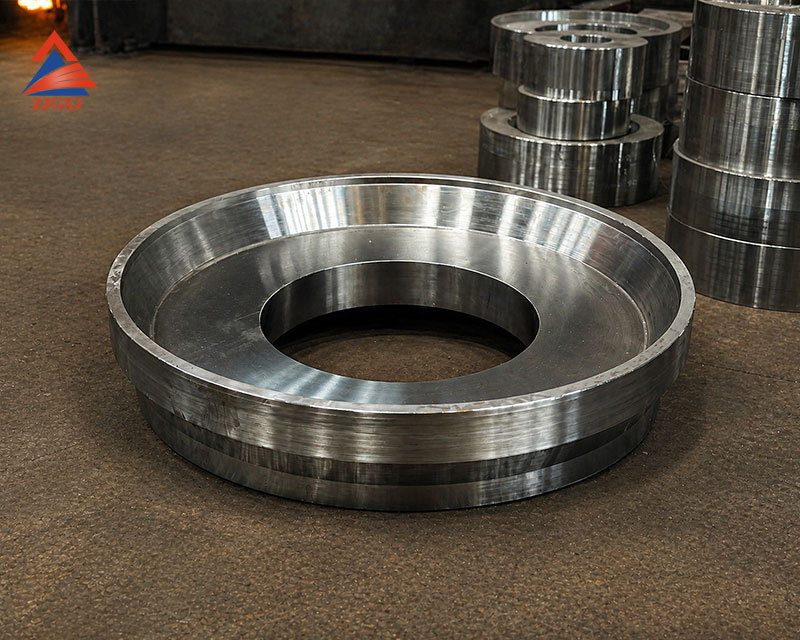
In the global marketplace of industrial manufacturing, the quality and compliance of forged die inserts with international standards are crucial factors for both suppliers and customers. As a supplier of Forged Die Insert, we are committed to ensuring that our products meet and exceed these standards. This blog post will explore how forged die inserts are crafted to comply with international regulations, the importance of these standards, and the processes involved in maintaining high - quality production.
Understanding International Standards for Forged Die Inserts
International standards for forged die inserts serve multiple purposes. They ensure the safety of the end - users, promote fair competition in the global market, and guarantee the interchangeability of parts. Standards such as ISO (International Organization for Standardization) and ASTM (American Society for Testing and Materials) set the benchmarks for material properties, dimensional accuracy, and performance characteristics.
ISO standards cover a wide range of aspects, including the chemical composition of the steel used in the die inserts. For example, ISO 683 - 17 specifies the requirements for tool steels, which are commonly used in forged die inserts. These standards define the acceptable limits for elements such as carbon, chromium, molybdenum, and vanadium. The right chemical composition is essential as it directly impacts the hardness, toughness, and wear resistance of the die insert.
ASTM standards, on the other hand, often focus on testing methods. ASTM E415, for instance, is a standard test method for the analysis of carbon and low - alloy steels by spark atomic emission spectrometry (AES). This test helps in accurately determining the chemical composition of the forged die insert, ensuring that it meets the specified requirements.
Material Selection and Quality Control
As a Forged Die Insert supplier, our first step in meeting international standards is the careful selection of materials. We source high - quality die steels from reputable suppliers who also adhere to international standards. The die steels we use are typically from well - known grades such as H13, D2, and A2, which are recognized and used globally.
Once the materials are received, a series of quality control checks are carried out. Chemical analysis is performed to verify the composition of the steel. This is done using advanced analytical techniques such as spectroscopy. We also conduct hardness testing to ensure that the steel has the appropriate hardness for the intended application. The hardness test is usually carried out using a Rockwell hardness tester, which is calibrated according to international standards.
In addition to chemical and hardness testing, non - destructive testing (NDT) methods are employed. Ultrasonic testing is used to detect internal defects such as cracks or inclusions in the forged die inserts. This helps in identifying any potential issues early in the production process, ensuring that only high - quality products are delivered to the customers.
Forging Process and Dimensional Accuracy
The forging process is a critical step in the production of forged die inserts. It involves shaping the steel under high pressure to improve its mechanical properties. We follow a strict forging process that complies with international best practices.
The Die Steel Forging process begins with the heating of the steel billet to a specific temperature range. This temperature is carefully controlled to ensure that the steel is in a malleable state without overheating. Overheating can lead to grain growth, which can reduce the strength and toughness of the die insert.
During forging, the steel is hammered or pressed into the desired shape. The number of blows and the pressure applied are precisely controlled to ensure uniform deformation of the material. This helps in achieving the desired grain structure, which is essential for the performance of the die insert.
Dimensional accuracy is another key aspect of meeting international standards. We use advanced machining techniques and precision measuring tools to ensure that the forged die inserts are within the specified tolerance limits. Coordinate measuring machines (CMMs) are used to measure the dimensions of the die inserts with high accuracy. These machines are calibrated regularly to maintain their precision.
Heat Treatment and Surface Finishing
Heat treatment plays a vital role in enhancing the mechanical properties of forged die inserts. After forging, the die inserts undergo a heat treatment process that typically includes quenching and tempering.
Quenching involves rapidly cooling the heated die insert in a suitable medium, such as oil or water. This process hardens the steel by transforming its microstructure. However, quenching can also introduce internal stresses in the material. To relieve these stresses and improve the toughness of the die insert, tempering is carried out. Tempering involves heating the quenched insert to a lower temperature and holding it for a specific period.
The heat treatment process is carefully controlled to ensure that the die inserts meet the required hardness, toughness, and wear resistance standards. We use thermocouples and temperature controllers to monitor and regulate the temperature during the heat treatment process.
Surface finishing is another important step in meeting international standards. A smooth and even surface finish not only improves the appearance of the die insert but also enhances its performance. We use various surface finishing techniques such as grinding, polishing, and coating. Coatings can provide additional benefits such as increased wear resistance and reduced friction.
Quality Assurance and Certification
To demonstrate our commitment to meeting international standards, we have a comprehensive quality assurance system in place. Our quality assurance processes cover every stage of production, from material selection to final inspection.
We conduct regular internal audits to ensure that our production processes are in line with international best practices. In addition, we seek external certification from recognized bodies. ISO 9001 certification, for example, is a widely recognized quality management system certification. It provides assurance to our customers that our products are manufactured under a controlled and reliable quality management system.
Importance of Meeting International Standards
Meeting international standards is not only a regulatory requirement but also has significant benefits for both our company and our customers. For our company, compliance with international standards enhances our reputation in the global market. It allows us to compete with other suppliers on a level playing field and opens up new business opportunities in different countries.
For our customers, using forged die inserts that meet international standards ensures the reliability and performance of their manufacturing processes. It reduces the risk of tool failure, which can lead to costly production downtime. Moreover, compliant products are more likely to be approved in international markets, enabling our customers to expand their business globally.
Comparison with Other Forging Products
In addition to Forged Die Insert, we also offer other forging products such as Forged Die Block and Mold Steel Plate Forging. While the basic principles of meeting international standards apply to all these products, there are some differences in their specific requirements.
Forged die blocks are typically larger and used for more heavy - duty applications. They require higher levels of strength and toughness, and the forging and heat treatment processes need to be adjusted accordingly. Mold steel plate forgings, on the other hand, often require a higher degree of flatness and surface finish due to their use in precision molds.
Conclusion
As a Forged Die Insert supplier, we understand the importance of meeting international standards in the production of our products. Through careful material selection, precise forging processes, appropriate heat treatment, and strict quality control, we ensure that our forged die inserts meet the highest global benchmarks.
If you are in the market for high - quality forged die inserts that comply with international standards, we invite you to reach out to us for more information and to discuss your specific requirements. Our team of experts is ready to assist you in finding the best solutions for your manufacturing needs.